Serengeti vs Masai Mara is hard to arrange when both destinations promise extraordinary wildlife and you cannot tell which is more appropriate for your travel days, budget and interests. This practical guide shows you where to go, how to compare routes and pricing, which mistakes to avoid and how to request a clear quote.
Why Serengeti vs Masai Mara deserves a thoughtful plan
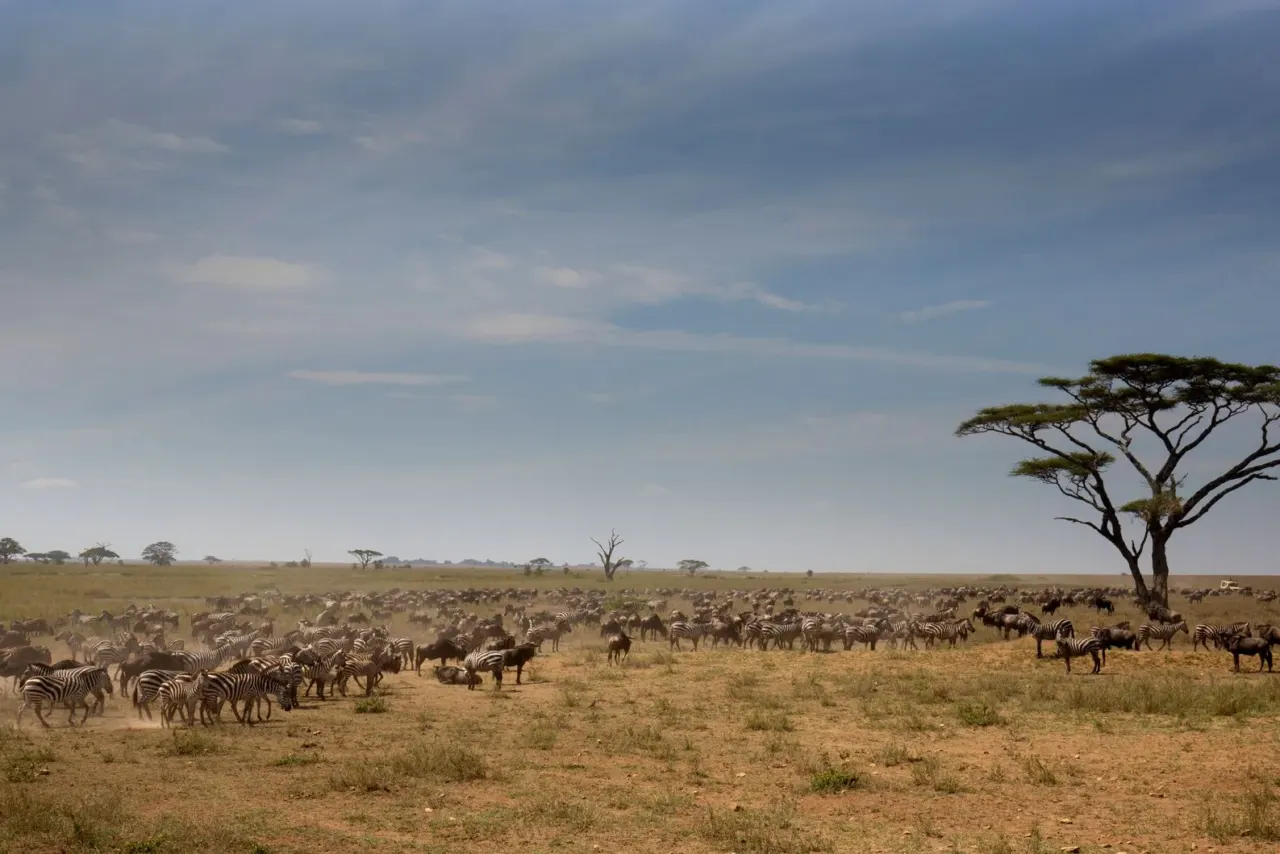
The Serengeti spreads over a vast Tanzanian landscape, and camp sector determines your practical game-drive area. The Masai Mara offers a Kenyan counterpart with its own reserve and conservancy arrangements. You should not assume a trip in one country uses the same gates, fees, airline or immigration process as the other. If you are considering both, a cross-border itinerary needs enough days to make the transfer worthwhile. These decisions affect not just the price but the wildlife time you actually enjoy. A beautiful itinerary cannot compensate for daily transfers that leave no time in the field.
Begin with the travelers rather than a brochure. Write down your dates, comfort requirements, must-see habitats and the journey length you can realistically manage. Ask for an itinerary that accounts for the whole experience from pickup to drop-off, including airport connections where applicable.
Jetmoor Safaris has an Jetmoor Serengeti vs Masai Mara itinerary example. It is an indicative planning outline, so availability, room types, meals, fees and the final amount must be confirmed in a dated proposal.
Serengeti vs Masai Mara: decide the experience before the price
Prioritize the experiences that would make the holiday worthwhile. Some groups value more game drives, while others prefer privacy, shorter transfers or a carefully chosen lodge. No option is universally superior because needs differ. It is easier to evaluate quotations when your key preferences are written down first.
For a short holiday, spend more time in the ecosystem you can reach sensibly. For a longer trip, consider a well-paced two-country plan. If a proposed route uses every available day for movement, simplify it. If the itinerary leaves long idle periods that do not suit you, discuss using those days more intentionally. Good planning is not about packing the schedule; it is about ensuring that each travel stage has a purpose.
Serengeti vs Masai Mara: a decision checklist
- Does the route include your most important wildlife area?
- How many nights are spent in each actual lodge?
- Which days are transfers rather than full game-drive days?
- Is the transport private, shared, road-based or flown?
- Which services and fees are included in writing?
Compare at least two alternatives using the same dates and rooming basis. This makes the trade-off visible instead of letting a single attractive headline drive the purchase.
Key locations for Serengeti vs Masai Mara
The route discussed here centers on Serengeti, Tanzania and Masai Mara, Kenya, with a potential gateway at Nairobi or Arusha. Names on a map are not a substitute for planning: the distance between the hotel, park gate, airstrip and wildlife viewing area can materially change the daily schedule.
The Serengeti spreads over a vast Tanzanian landscape, and camp sector determines your practical game-drive area. The Masai Mara offers a Kenyan counterpart with its own reserve and conservancy arrangements. You should not assume a trip in one country uses the same gates, fees, airline or immigration process as the other. If you are considering both, a cross-border itinerary needs enough days to make the transfer worthwhile. Ask where you will actually sleep and which area each game drive covers. Also ask whether a listed activity is permitted under the relevant protected-area rules. The destination label alone does not explain park access or any special conservancy arrangements.
For official information, review Tanzania National Parks. Treat this as a place to check destination regulations and visitor information, not as confirmation of Jetmoor’s lodging availability or price.
Practical route stages for Serengeti vs Masai Mara
Use the sequence below to start a conversation with a planner. It is not a substitute for a dated day-by-day itinerary or a guarantee that particular activities will be available. The main aim is to protect the time that matters.
- Stage 1: Choose which international arrival gateway works better. Confirm the transfer, activity window and any costs that depend on this stage.
- Stage 2: Compare the actual nights and wildlife hours in each location. Confirm the transfer, activity window and any costs that depend on this stage.
- Stage 3: Check a two-country transfer and entry-document plan. Confirm the transfer, activity window and any costs that depend on this stage.
- Stage 4: Select a single destination when the holiday is too short. Confirm the transfer, activity window and any costs that depend on this stage.
For a short holiday, spend more time in the ecosystem you can reach sensibly. For a longer trip, consider a well-paced two-country plan. Whenever a stop is added, ask what you lose in drive time or rest. A route can look impressively varied while offering less real wildlife viewing than a more focused journey.
Timing and conditions for Serengeti vs Masai Mara
Seasonal demand, local weather, wildlife movements, supplier operations and travel documents can influence what works. Compare date ranges rather than trusting a universal ‘best time’ claim. Where migration or animal behavior is important, remember that wildlife is free to move.
Watch out for treating two different countries as one simple park, booking a short trip with an unrealistic border day and assuming migration animals appear at the same spot all year. These mistakes are usually avoidable through a better written brief and more transparent quotations. Ask the planner to explain the alternative if a hoped-for wildlife event, hotel or flight does not work out.
Specific prices, park fees and entry requirements should be checked for your actual travel month. Older content can be useful for background, but only current official guidance and a dated quote can establish what you need to book.
Road, fly-in and transfer choices
Road travel can be part of the East African experience. It also takes time, which means it may not suit a very short holiday. Fly-in travel can protect valuable days for wildlife, but it introduces baggage allowances, aircraft schedules, airstrip transfers and potential weather-related disruption. Neither option is inherently best for every group.
For a short holiday, spend more time in the ecosystem you can reach sensibly. For a longer trip, consider a well-paced two-country plan. Ask your planner whether a quoted flight is a scheduled service or a private charter. Verify whether a ‘private safari’ refers to your vehicle and guide, your room, or every part of the journey. These are separate services. A private game-drive vehicle does not automatically mean private aircraft seats or exclusive lodge facilities.
Compare the two options using the same dates and accommodation standard. If flying saves meaningful wildlife time, it may be worth the premium. If your holiday is longer and you enjoy varied scenery along the road, a well-planned overland journey could give you a richer sense of place. Put departure and arrival times on the same page as the activities they affect.
Accommodation features that change your experience
Ask for a property name, specific room category, meal plan and location before committing. Labels such as ‘budget’, ‘mid-range’ and ‘luxury’ are useful briefs, but they are not room specifications. What matters in real life is whether the accommodation suits your comfort, accessibility, dietary, privacy and family requirements.
A beautiful lodge that forces a long journey before each game drive may not represent value. Conversely, a simple property with efficient access can be ideal when wildlife viewing is your main priority. Confirm whether your itinerary uses one base for several nights or changes property every day. Two consecutive nights often feel very different from two separate one-night stops.
| Feature | Useful question to ask |
|---|---|
| Actual location | How far is the accommodation from the planned viewing area? |
| Room arrangement | Which category and bed configuration are confirmed for our party? |
| Meals and drinks | Which meals and beverages are included on each day? |
| Guiding | Who leads the drives, and is the vehicle private or shared? |
| Activities | Which optional experiences require additional fees? |
| Booking conditions | What are the deposit, date-change and cancellation rules? |
These checks are especially important for first-time visitors, photographers and families with fixed school-holiday dates. A detailed accommodation brief helps Jetmoor recommend properties that match your actual expectations rather than attaching a generic room label to a safari title.
Serengeti vs Masai Mara pricing and honest budget comparisons
Package prices are not stable across dates and group sizes. An advertised starting figure can refer to a particular season, occupancy arrangement or accommodation assumption. For this guide, the linked Jetmoor safari programme displays USD 4,490 per person sharing; this is a planning figure displayed on the referenced Jetmoor itinerary, not a confirmed offer. Request the full current price for your exact travelers and travel month before using any figure to make a payment decision.
| Style | What changes | Planning price |
|---|---|---|
| Shared or simpler lodge safari | Shared transport and straightforward accommodation | $—; request actual quote |
| Private mid-range safari | Dedicated vehicle and chosen lodge category | $—; request actual quote |
| Private premium or fly-in safari | Higher accommodation or air transfer cost | $—; request actual quote |
| Linked Jetmoor outline | See dated assumptions and package page | USD 4,490 per person sharing |
When you compare packages, ask which park and conservation-area fees are included, how children are priced, whether a single traveler pays a supplement, and which meals and transfers apply. Avoid calculating an all-inclusive cost from a partial headline. It is more useful to learn what you need to add than to receive a suspiciously precise estimate with no supporting itinerary.
Budget formulas for comparing safari offers
Use the first formula to build an apples-to-apples trip total. It is a budgeting method, not a claim about how operators calculate their business rates.
T means total, A accommodation, G guiding and vehicle, R reserve or park access, M movement between places, and X extra activities. If one proposal includes a component and the other does not, adjust the comparison before choosing.
P is a simple per-traveler average, T the full party total, and N the number of travelers. Actual child rates, different room categories and solo supplements may not divide equally, so ask for each person’s price when necessary.
Record the currency and whether the amount is calculated per person sharing or for the entire group. Confirm the current cancellation terms. Ask who bears any change in official fees between quotation and arrival. If the answer is vague, request a revised document rather than relying on a verbal reassurance.
An illustrative comparison chart (not a price survey)
The chart illustrates how a traveler might divide planning attention among trip decisions. It is not a survey, forecast or quote; the percentages are deliberately illustrative. Your actual costs may be very different, especially when aircraft transfers or premium lodges dominate the itinerary.
| Planning area | Illustrative attention |
|---|---|
| Accommodation | 30% |
| Wildlife access | 25% |
| Transport | 20% |
| Itinerary timing | 15% |
| Optional activities | 10% |
Use this simply as a conversation starter. A traveler who prioritizes photography could allocate more attention to guiding and location. A family may value comfort and short connections. A honeymoon couple might care deeply about privacy. These preferences are better captured in a short planning brief than by using a generic percentage as a purchasing formula.
Practical preparation before departure
Start with the official entry requirements for every country on your route. For Kenya, the Directorate of Immigration’s eTA information gives the current application starting point, with exceptions and eligibility to be checked for your nationality. For itineraries involving Tanzania or Zanzibar, verify their requirements separately instead of assuming the rules carry across a border.
Review travel-health advice with a qualified clinician well before departure. The CDC’s Kenya traveler guidance covers health considerations, but individual medical decisions require personal advice. Check insurance coverage for safari activities, medical emergencies, trip interruption and any optional adventure experiences.
Prepare for early starts with practical layers, comfortable clothing, sun protection, insect repellent, binoculars and a secure place for documents. Carry any necessary medication as advised and keep electronics charged. If flights are part of the route, confirm soft-bag and weight rules with the specific airline; never assume a domestic service accepts your international luggage allowance.
How to choose activities without overspending
For Serengeti vs Masai Mara, distinguish essential wildlife-viewing activities from extras that sound appealing only in a sales description. A good wildlife drive with enough time, a capable guide and a sensible base is often the foundation of the trip. Balloon flights, cultural experiences, beach extensions and special dining can add enjoyment, but should be priced separately and selected for a clear reason.
The Serengeti spreads over a vast Tanzanian landscape, and camp sector determines your practical game-drive area. The Masai Mara offers a Kenyan counterpart with its own reserve and conservancy arrangements. You should not assume a trip in one country uses the same gates, fees, airline or immigration process as the other. If you are considering both, a cross-border itinerary needs enough days to make the transfer worthwhile. Discuss any mobility requirements and the age suitability of activities before making a booking. For example, a walk may require a trained guide, a particular permit and different rules than ordinary vehicle viewing. A boat outing may not be included even where a route passes a lake. Your itinerary must specify what is permitted, included and optional.
One simple strategy is to choose a single memorable upgrade rather than a long list of extras. Ask what an additional night, a private vehicle, a more convenient lodge or a flight connection would improve. Compare those benefits with the cost. Keep wildlife welfare and local rules central to every choice.
Three questions that can rescue an overloaded itinerary
Question one: Where will we sleep on each night? If the answer is uncertain, the daily travel pattern is uncertain too. Request named properties or clear, comparable alternatives. Some travel plans look balanced until you see consecutive hotel changes that require packing, checkout, long drives and check-in almost every day.
Question two: Which days offer a full, usable wildlife session? Count activity time after access rules and transfer assumptions. An itinerary with many famous names but almost no full days can be less satisfying than a focused plan. This is particularly relevant to first-time visitors, photographers and families with fixed school-holiday dates because energy, interest and comfort differ from one group to another.
Question three: What changes if a transfer or weather disrupts the schedule? Ask whether there is a reasonable adjustment that protects your highest-priority activity. No supplier can eliminate every possibility of delay. A transparent itinerary explains the risks and the applicable terms rather than promising impossible certainty.
For a short holiday, spend more time in the ecosystem you can reach sensibly. For a longer trip, consider a well-paced two-country plan. Use these answers to decide whether to reduce stops, add a night, change transport or choose a different starting airport. That conversation often improves the travel experience more than upgrading a room category would.
Ethical wildlife viewing and respectful visits
Wildlife is unpredictable, and the animals are not props for a photograph. Respect park and reserve instructions, stay in authorized areas, and follow guide directions. Never pressure a guide to chase animals, block their movement or approach dangerously close. A remarkable encounter should not depend on disturbing the animal.
Be thoughtful when visiting communities, photographing people or purchasing local crafts. Ask for permission before taking portraits and seek experiences that are respectful rather than staged solely for tourists. Carry out waste and follow any restrictions on plastics, noise or off-road driving.
A successful trip balances visitor enjoyment with the long-term health of habitats and communities. Your quote should identify any specialist visit clearly so you can ask sensible questions about access, guidance and conduct. That is part of buying a quality safari, not an optional ethical afterthought.
How to book Serengeti vs Masai Mara with fewer surprises
Send the same brief to every operator you compare: travel window, party size, ages, nationality or residency categories where relevant, budget range, preferred vehicle style, desired comfort and non-negotiable experiences. This makes quotations meaningfully comparable. If you need a private vehicle, say it plainly. If a camp-run drive is acceptable, ask what that arrangement includes.
Get the precise accommodation, room basis, meals, guide and transfer assumptions on the written itinerary. Confirm the booking status before paying. Ask for park-entry charges, activity fees, and any exclusions. Verify current payment instructions directly with the operator; do not rely solely on forwarded screenshots or messages from an unfamiliar number.
Jetmoor’s booking terms page and cancellation and refund information currently ask travelers to request the latest written policy. Therefore you should obtain the current complete terms before committing. If you need clarification, use the Jetmoor Safaris contact page.
Finally, keep the dated itinerary, invoice or quote, payment confirmation, insurance details and emergency contacts together in an accessible folder. Reconfirm essential travel documents and any airline baggage restrictions closer to departure. Good administration is what allows the actual safari to feel relaxed.
Advantages of a tailored Serengeti vs Masai Mara itinerary
- Better use of time: The route is built around your actual arrival, departure and interest rather than a generic calendar.
- Clearer costs: You can see which park fees, transport, accommodation and extras are included.
- Appropriate pace: Rest, family needs, photography and special occasions can be prioritized.
- More useful comparisons: Alternative safari styles can be assessed using equivalent assumptions.
- Honest expectations: The planner can explain uncertainty around wildlife, weather and availability.
These advantages do not depend on an unrealistic promise that every animal will appear or every flight will run exactly to schedule. They come from aligning the journey to the people traveling. In your enquiry, explain what would make the trip feel successful. Jetmoor can then propose a suitable route and a dated per-person price instead of relying on a headline alone.
Serengeti vs Masai Mara FAQs
Is Serengeti vs Masai Mara suitable for first-time visitors?
It can be when the pace, route and accommodation fit your group. For a short holiday, spend more time in the ecosystem you can reach sensibly. For a longer trip, consider a well-paced two-country plan.
How much does Serengeti vs Masai Mara cost?
The linked Jetmoor itinerary shows an indicative planning figure of USD 4,490 per person sharing. It is not a guaranteed rate; obtain a dated full quote.
When should I book Serengeti vs Masai Mara?
Start planning when dates and group size are clear. Compare options before committing, but do not expect anyone to guarantee wildlife sightings or weather.
Can the Serengeti vs Masai Mara itinerary be customized?
Jetmoor describes tailor-made safari planning. Send your needs for transport, rooming, comfort, activities and budget through the quote form.
What do I need to confirm about park fees?
The included protected areas, visitor categories, chargeable days and whether those fees are part of the quote. Check the relevant authority’s current rules.
What travel documents should I check?
Requirements depend on nationality and every country visited. Consult the official immigration sources and prepare travel insurance as appropriate.
What is the most important contract check?
Ensure the itinerary, hotel names, meals, dates, final price, payment instructions, exclusions and cancellation terms agree in writing.
Get a tailored Serengeti vs Masai Mara itinerary from Jetmoor Safaris
For a short holiday, spend more time in the ecosystem you can reach sensibly. For a longer trip, consider a well-paced two-country plan. Use this guide as a practical checklist, then compare the full quote rather than a headline. A thoughtful safari respects your budget and available time while remaining honest about wildlife and weather.
Review Jetmoor Serengeti vs Masai Mara itinerary example, complete the Jetmoor safari planning form, and request current written payment and cancellation terms before committing. Ask for named accommodation and an itemized total for the exact dates of travel.
Content note: This guide was prepared with AI assistance for Jetmoor Safaris using the company’s published indicative itineraries and linked public sources. It is general planning information, not a confirmed booking. Confirm current fees, accommodation, transport, entry conditions and payment terms with the operator and relevant authorities. Updated: November 2026.