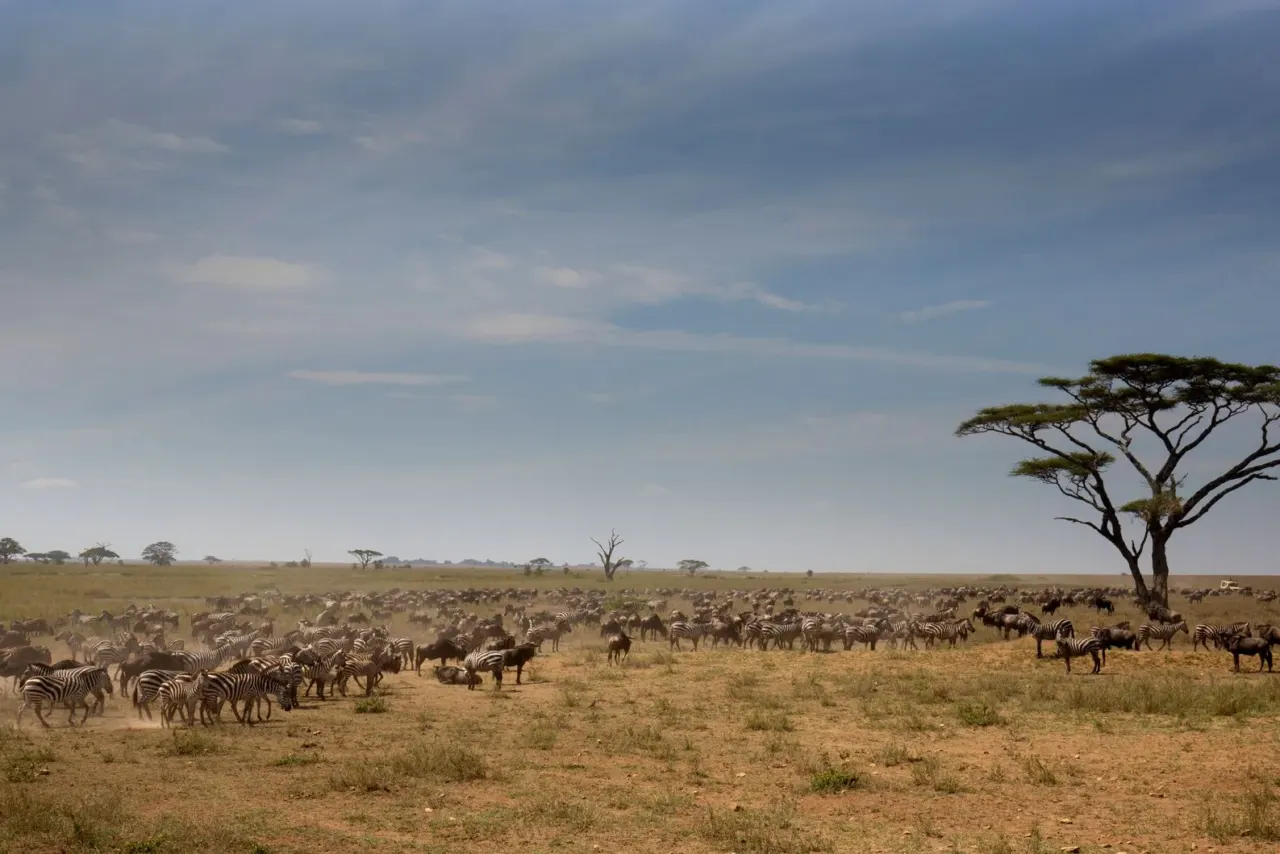
A Ndutu calving safari is a chance to explore the southern Serengeti ecosystem when fresh grazing can draw great herds and newborn animals to the plains. It is a different trip from waiting beside a northern river for a crossing. For European travelers considering an early-year safari, the essential decisions are your date window, the actual location of your camp and how much uninterrupted time you give the area.
Why choose a Ndutu calving safari?
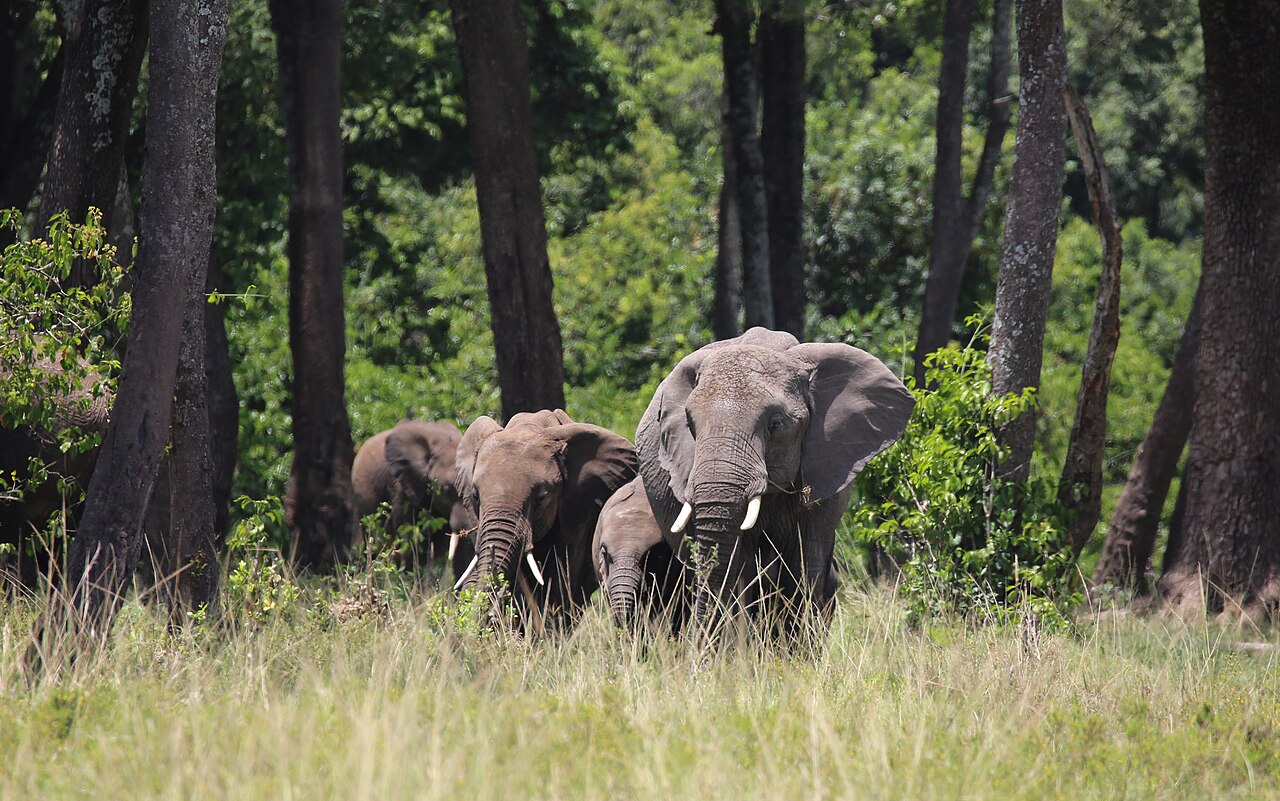
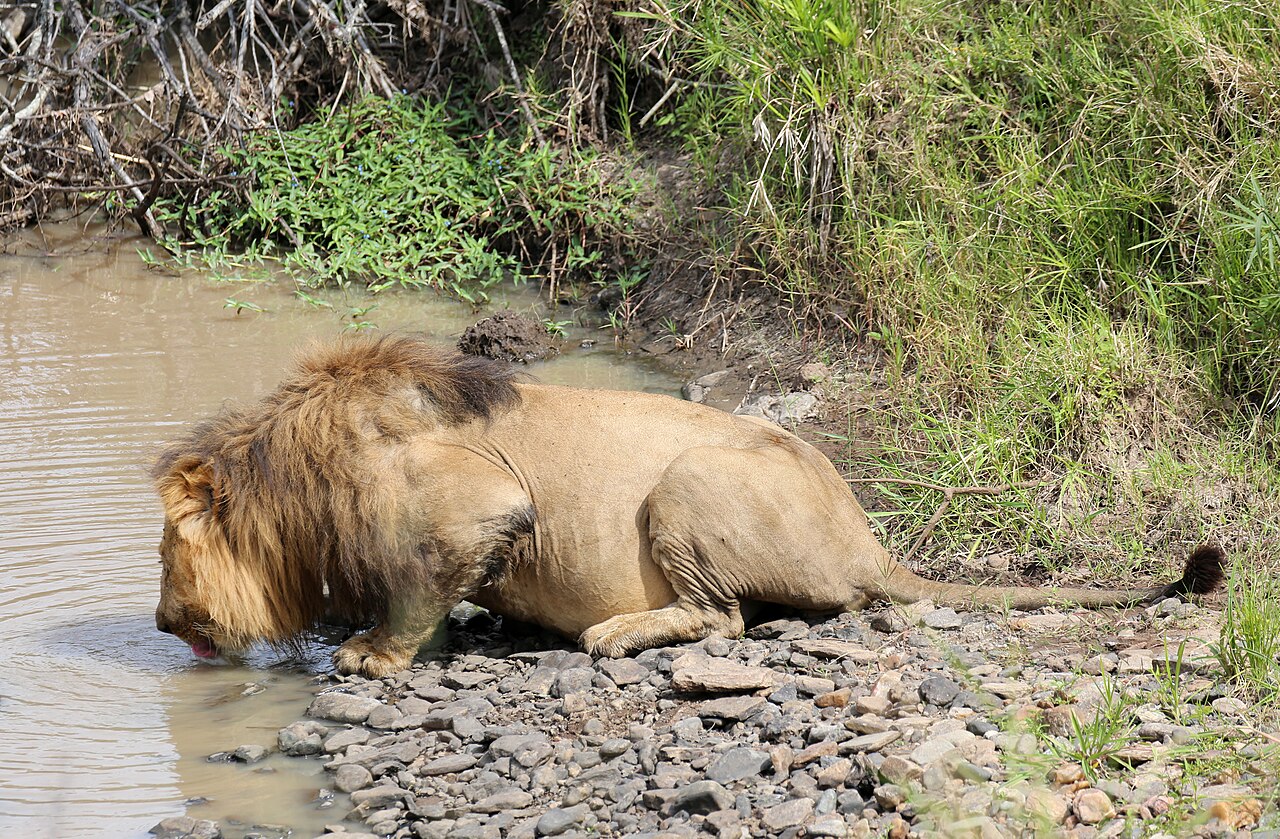
The attraction is a landscape full of relationships: grazing herds, young animals finding their feet, predators watching for opportunities and birds moving through grassland and woodland. A rewarding day need not contain a birth or a dramatic hunt. Time spent observing ordinary behavior can be just as memorable as the event you imagined before traveling.
Tanzania National Parks places the southern plains’ calving period broadly between January and March. Ndutu Safari Lodge describes February as a traditional peak, while explaining that the animals follow rain and new grass. Treat this as a seasonal guide. Neither a birth nor the location of a particular herd can be scheduled for your arrival.
This style of safari suits travelers who want several days in one wildlife area, enjoy photography and are comfortable allowing nature to set the pace. If your main ambition is a river crossing, ask for a different seasonal and geographical plan rather than expecting both experiences from one short stay.
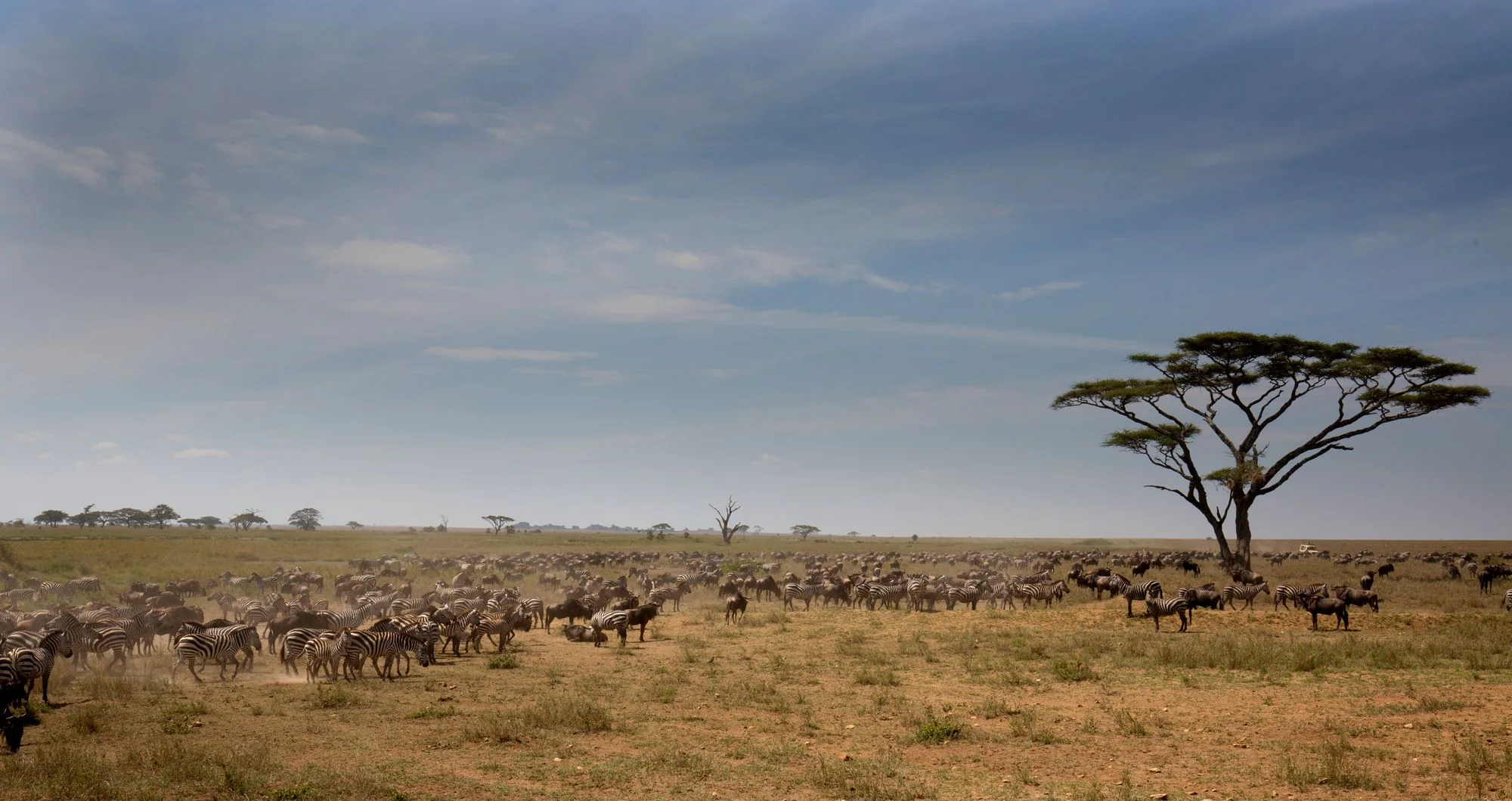
Understand where Ndutu is before choosing a room
“Serengeti” is often used loosely in travel descriptions. The greater ecosystem is larger than a single protected area, and the Ndutu area connects southern plains with the Ngorongoro Conservation Area. The Ngorongoro Conservation Area Authority describes Lake Ndutu and Lake Masek as saline basins beside woodland and short-grass plains.
This matters when reading an itinerary. A lodge near Ngorongoro Crater is not automatically a convenient base for repeated Ndutu drives. Nor does a camp elsewhere in the Serengeti become a calving-season base merely because its brochure mentions the migration. Request the exact overnight location and ask which area the guide intends to explore each day.
Protected-area boundaries also matter for the quotation. Ask the planner to identify the relevant access and accommodation charges for the route. Do not assume that one park fee covers every activity across the wider ecosystem, or that an off-road driving arrangement is permitted everywhere.
Ndutu calving safari timing: choose a useful window
If your schedule is flexible, give Jetmoor a range of possible departure dates and explain that calving-season wildlife is the priority. Compare the route and camp positioning for each option before deciding on an international flight. A small calendar adjustment may improve the proposed geography, but it cannot create a wildlife guarantee.
For a February school break, calculate the actual nights available in Tanzania after travel. A week away from home may leave fewer safari nights than expected. If your holiday falls outside the main early-year period, consider whether general Serengeti wildlife would satisfy you or whether another migration region would be a better match.
Plan a Ndutu calving safari around observation
- Ask how many complete days you will have in the southern area.
- Keep accommodation close to the intended drives for your date window.
- Allow for variable ground conditions and changes to daily plans.
- Choose an itinerary you would enjoy even without witnessing a birth.
A six-day outline with the nights accounted for
Jetmoor’s six-day Ndutu calving-season outline is a starting point for discussion. The allocation below is a separate editorial example of how five nights might support a six-day land trip. It is not a confirmed departure or a claim about rooms already held for you.
| Base | Nights | Purpose |
|---|---|---|
| Arusha gateway | 1 | Arrival, rest and a practical departure briefing |
| Ndutu area | 3 | Two full intervening days plus any feasible transfer-day viewing |
| Return gateway | 1 | A margin before onward travel |
Day one is arrival and rest. Day two moves toward the chosen Ndutu base, with the journey planned around actual conditions. Days three and four are the complete local safari days. Day five returns toward the departure gateway, and day six is onward travel. Every activity still depends on the final transfer plan.
Adding Ngorongoro Crater requires a deliberate change: more time, a different overnight sequence or less time in Ndutu. Do not hide a crater visit inside an already busy airport-transfer day. Ask for both versions and compare the effect on your most important wildlife experience.
Check the land itinerary length
For an itinerary starting on arrival day and ending on departure day, land-trip days equal booked nights plus one. International overnight flights are counted separately.
Permanent lodge or seasonal camp?
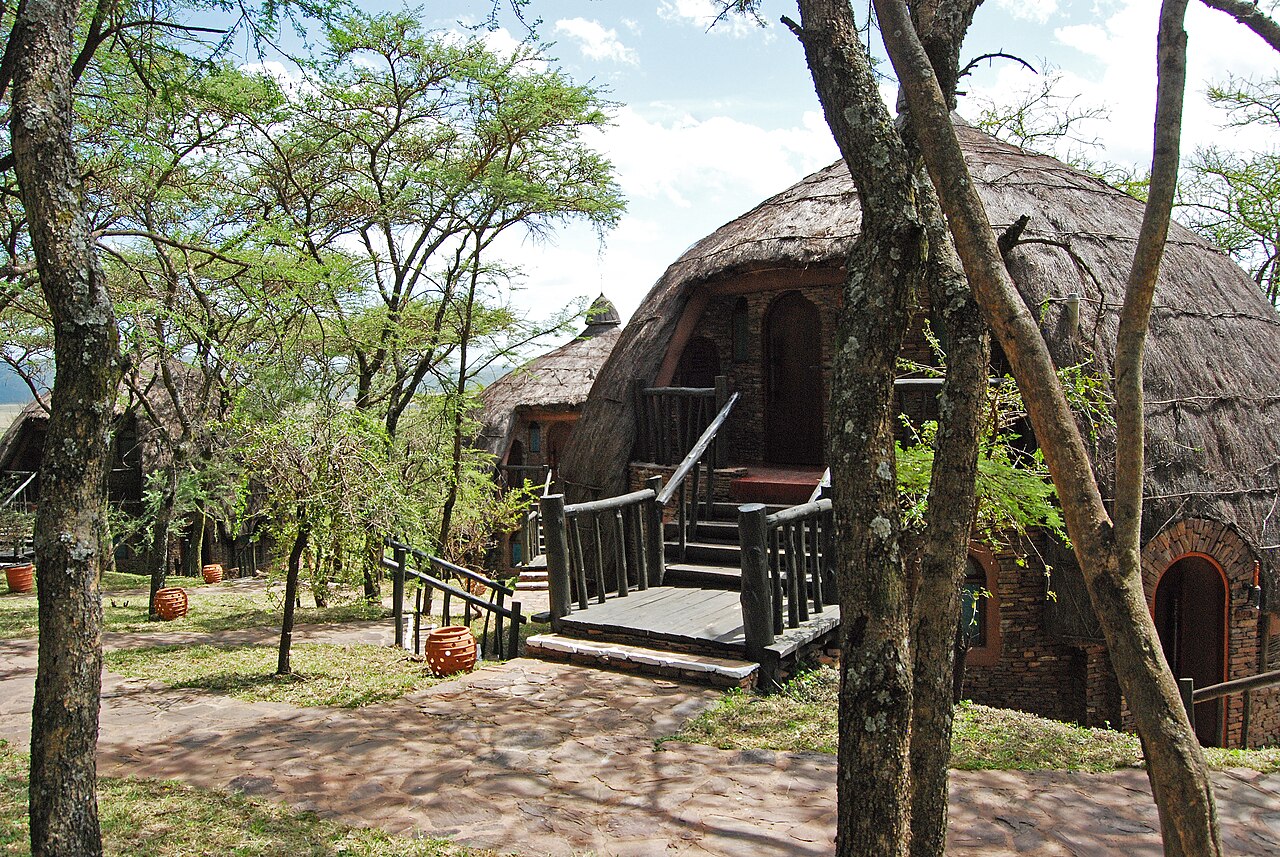
A permanent lodge provides a fixed location and established room layout. A seasonal camp can offer a different style of stay and may operate at locations selected for part of the year. Neither label alone tells you the bathroom standard, charging arrangements, access route or distance to the wildlife area.
As a real example of the first style, Ndutu Safari Lodge describes stone-and-thatch en-suite cottages and private verandas in the Ngorongoro Conservation Area near the southern plains. This is an accommodation example for comparison, not a claim that Jetmoor’s sample itinerary includes it. Availability and the room type must be confirmed in a dated proposal.
| Accommodation question | Why it matters |
|---|---|
| Where will the property operate on our dates? | Seasonal camp names do not establish a fixed year-round location. |
| What bathroom and hot-water arrangements are provided? | A tent photograph does not explain the practical facilities. |
| How are cameras and devices charged? | Charging access affects a photography-focused stay. |
| How far is the room from the dining area? | Paths, steps and escort arrangements may affect suitability. |
| Are drives private or shared? | Room privacy and vehicle privacy are separate bookings. |
Describe your comfort requirements in ordinary language. “We need a private bathroom, reliable charging and a room with few steps” is more useful than simply requesting luxury. Tell the planner about dietary needs, family room arrangements and any difficulty boarding a safari vehicle before a room is selected.
Photograph behavior without disturbing it
Calving-season photography asks for patience. Give the guide room to assess what the animals are doing and where the vehicle can wait appropriately. Avoid making a newborn animal the sole purpose of the drive. A herd crossing open grassland, a family of zebras or a bird against the sky can create a more complete visual record of your trip.
Prepare equipment before leaving camp so a promising sighting does not become a hurried search for a memory card. Keep a simple cleaning kit and protect equipment from dust and weather. If you plan to use a substantial lens or support, ask about the vehicle layout; do not assume every seat has the same photographic access.
- Bring binoculars for relaxed observation between photographs.
- Carry spare batteries and storage within your transport limits.
- Agree with companions about long waits and preferred breaks.
- Never ask the driver to separate animals or crowd a mother and calf.
What should a Ndutu calving safari cost include?
The price depends on the confirmed dates, camp, group size and transport arrangement. Use a dated quote rather than an old online rate. A cheaper proposal that places you too far from the intended area may offer less useful viewing time even when the accommodation itself is comfortable.
| Cost component | Amount | What the dated quote should specify |
|---|---|---|
| Safari accommodation | Dated quote | Named property, dates, rooms, meals and any compulsory supplements. |
| Vehicle and guide | Dated quote | Private or shared use, pickup point and included safari days. |
| Area access | Dated quote | All relevant conservation, park and accommodation-related charges. |
| Transfers or flights | Dated quote | Ground route or air sectors, baggage and airstrip collections. |
| Arrival and return nights | Dated quote | Gateway hotels, airport transfers and meal exclusions. |
| Optional additions | Dated quote | Crater visit, other parks or beach extension shown separately. |
If two travelers share a private vehicle, compare their total with the actual alternative rather than assuming a larger group price applies. A private vehicle’s cost is shared across that party, while accommodation and access charges may follow different rules. Ask the planner to explain the calculation instead of creating your own discount assumptions.
Understand one part of a private quote
The quoted vehicle cost divided by the travelers sharing it gives only the vehicle contribution per traveler. It does not include rooms, fees or other separately priced services.
Prepare for an early-year trip from Europe
Choose your international gateway alongside the safari route. Kilimanjaro International Airport serves northern Tanzania; Arusha Airport is a different airport. Have the exact pickup point, transfer and first hotel written down. A flight landing late in the day should not quietly turn into an assumed full safari day.
For any domestic flight, check the operating airline’s baggage rules before packing. A road itinerary also benefits from manageable bags, but it does not remove every practical luggage limit. Carry travel documents, essential personal items and required medication appropriately, following professional advice where needed.
Read current official immigration and travel guidance for your passport and complete route before booking and again before departure. UK residents with different nationalities should not assume the same entry rules apply. Discuss individual travel-health questions with a qualified professional and review insurance for the planned activities and transport.
Keep the safari focused when adding another destination
Zanzibar, Tarangire and Ngorongoro may all sound appealing, but each addition consumes time and budget. Start with the number of full Ndutu days you want to protect. Then add the next destination only if the transfer and overnight sequence still feels comfortable.
- For a short holiday: concentrate on Ndutu and straightforward gateway nights.
- For broader wildlife: compare an extra park with an extra day at the main base.
- For a beach finish: add the flight and island nights as a clearly priced extension.
The advantages of this approach are a calmer pace, fewer unnecessary room changes and clearer expectations. For the wider seasonal picture, read Jetmoor’s Great Migration planning guide. Your final proposal should explain why its dates and camp locations fit your interests.
Frequently asked questions
Does a Ndutu calving safari guarantee a birth sighting?
No. The season increases the relevance of the southern plains for this interest, but individual births, herd positions and viewing opportunities remain unpredictable.
Is Ndutu the same place as Ngorongoro Crater?
No. The Ndutu area and the crater are different destinations within the wider northern Tanzania journey. Ask for separate locations and enough transfer time if you include both.
How many nights should I consider in Ndutu?
Three nights provide two full intervening days at the same base. Additional nights may suit patient wildlife observation; the right length depends on your overall holiday and interests.
Can families enjoy calving season?
A carefully paced trip can work for families, subject to accommodation and activity policies. Discuss children’s ages and remember that predator behavior can be upsetting for some viewers.
Is a seasonal camp automatically better than a lodge?
No. Compare location, facilities, access and the drive arrangements for your dates. The most suitable choice is the one that fits your route and comfort needs.
Can I finish the trip in Zanzibar?
Ask for a separate connecting-flight and beach proposal. Count the transfer day and island nights explicitly so the extension does not remove the Ndutu time you wanted.
Plan your safari with Jetmoor
Share your travel dates, party size, preferred pace and the experiences that matter most. Jetmoor can use those details to prepare a route for discussion, with named accommodation and a dated quotation for you to review.
Prepared with AI assistance for Jetmoor Safaris using its indicative itineraries and official destination information. Last updated November 2026. Confirm dated services and written terms before booking.
Planning sources and further checks
Destination and supplier details were checked against these sources in November 2026. Recheck current requirements and the services in your dated proposal.
- Tanzania National Parks
- Ndutu Safari Lodge: migration
- Ngorongoro Conservation Area Authority
- Ndutu Safari Lodge: cottages
- Kilimanjaro International Airport
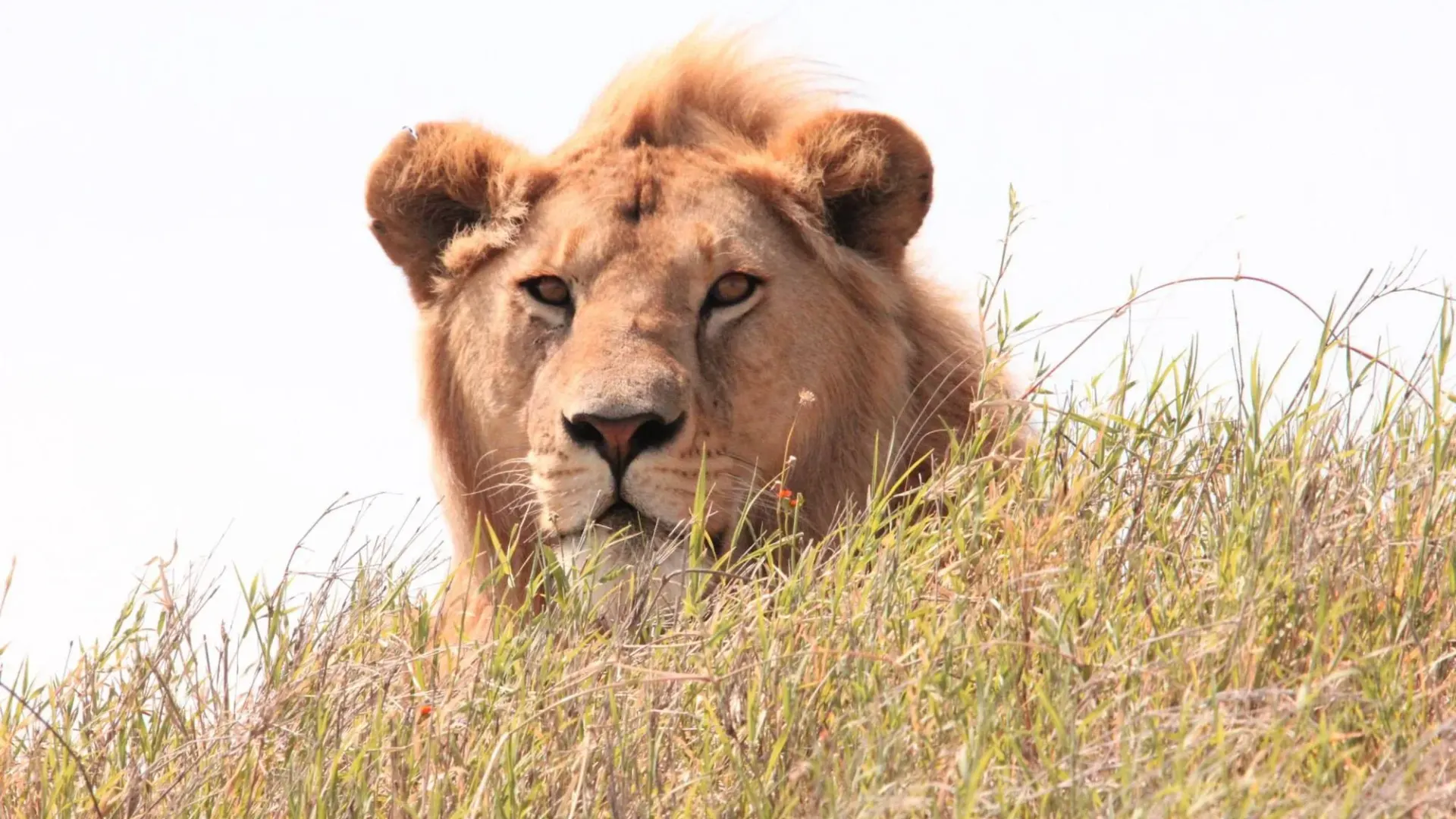
Featured photograph: Lion looking through tall grass in the Serengeti. Photo: Ghida Basma / Pexels. Resized for display.